Table Of Content
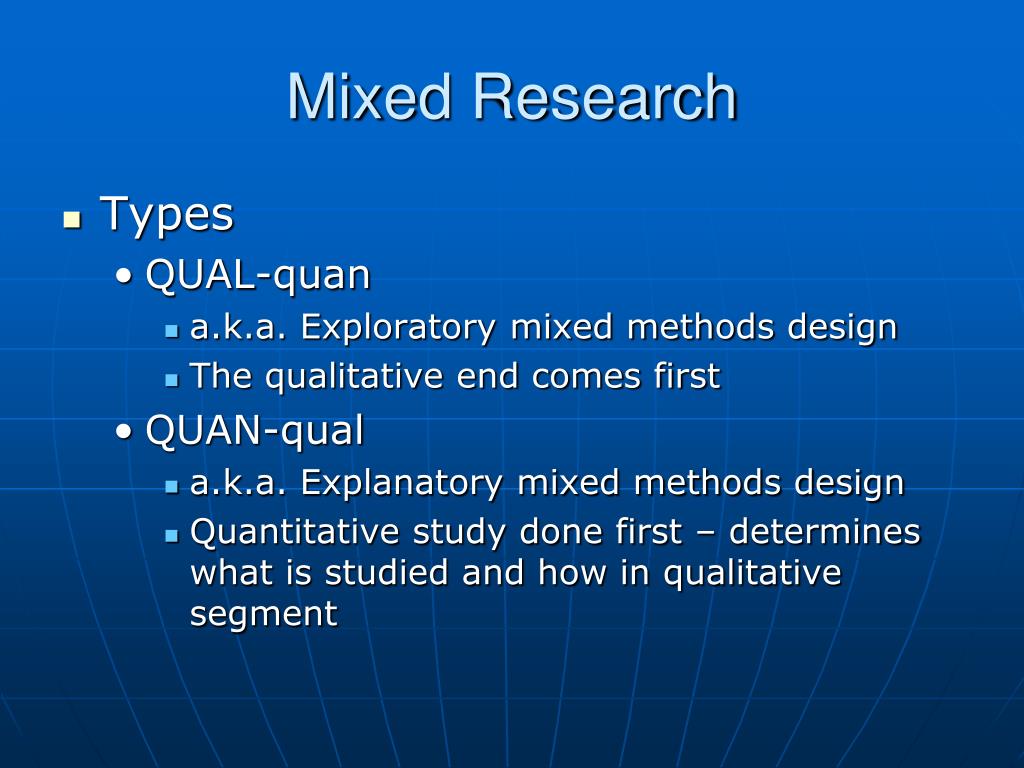
Much more important, however, than a design name is for the author to provide an accurate description of what was done in the research study, so the reader will know exactly how the study was conducted. In the mixed methods literature, the distinction between sequential and concurrent usually refers to the combination of concurrent/independent and sequential/dependent, and to the combination of data collection and data analysis. In addition to a mixing purpose, a mixed methods research study might have an overall “theoretical drive” (Morse and Niehaus 2009).
Point of integration
Furthermore, larger local agencies were better equipped to allocate sufficient staff members to handle the manual issuance of benefits. In contrast, smaller agencies or those grappling with staffing shortages faced challenges as the burden often fell on a few staff members. This reallocation of staff time and clinic duties, including reduced availability for appointments, highlighted the need for more equitable distribution of resources and staffing support to ensure the successful implementation of CVB changes across all agencies. This paper illustrates the growing importance of mixed-methods research to many health disciplines ranging from nursing to epidemiology.
Latest articles
A second merit of the typological approach is the provision of common mixed methods research designs, of common ways in which qualitative and quantitative research can be combined, as is done for example in the major designs of Creswell and Plano Clark (2011). Contrary to other authors, however, we do not consider these designs as a feature of a whole study, but rather, in line with Guest (2013), as a feature of one part of a design in which one qualitative and one quantitative component are combined. Although one study could have only one purpose, one point of integration, et cetera, we believe that combining “designs” is the rule and not the exception. Therefore, complex designs need to be constructed and modified as needed, and during the writing phase the design should be described in detail and perhaps given a creative and descriptive name. Descriptive statistics for the WIC State agencies that submitted data were conducted, including percentages of responses by USDA FNS Region, average caseload, and number of agencies that supplied county, race/ethnicity, and FV subcategory data.
What is the difference between mixed methods and multiple methods?
A mixed-methods exploration of virtual reality as a tool to promote green exercise Scientific Reports - Nature.com
A mixed-methods exploration of virtual reality as a tool to promote green exercise Scientific Reports.
Posted: Tue, 05 Apr 2022 07:00:00 GMT [source]
During the first quarterly survey, participants who received monthly income will be purposively sampled and asked if they would be interested in participating in an additional in-depth qualitative interview to learn more about their experience with the program. Maximum variation sampling will be used to ensure differences in race, ethnicity, and gender in our qualitative subsample. Those who are interested and agree to participate will be contacted by a research team member who has been trained in conducting qualitative interviews. Interviewers will schedule a convenient time and place to meet unless participants request a phone interview.
Triage personnel often provide different responses that are not documented, which leads to safety problems for the caller. In a study by Wahlberg et al., triage personnel reported callers’ anger, loud voice, and disrespectful behavior. In addition, they barely listened to the triage personnel’s guidance and were ultimately dissatisfied with the call.
Obstetric triage services are usually provided physically (face-to-face), however, in many Western societies, women typically make an initial phone call to inquire about the need for counseling or a visit to the emergency room [4,5,6,7,8,9]. Telephone triage is a service delivery system that is currently not performed uniformly due to the lack of specific instructions [1,2,3]. The guideline included the items for evaluating the severity of obstetric symptoms at five levels including “critical”, “urgent”, “less urgent”, “no urgent”, and “recommendations”. The validity of the guideline was approved at 96%, 95%, 97%, 95%, 93%, and 100% for six dimensions of AGREE II including scope and purpose, stakeholder involvement, the rigor of development, clarity of presentation, applicability, and editorial independence, respectively.
Availability of data and materials
Nevertheless, as a distinct subfield, it also has specific principles that govern the production of knowledge and the rewards of domination. The question arises whether researchers should plan all these decisions beforehand, or whether they can make them during, and depending on the course of, the research process. On the one hand, a researcher should decide beforehand which research components to include in the design, such that the conclusion that will be drawn will be robust.
Intervention
A mixed methods design can be thought out in advance, but can also arise during the course of the conduct of the study; the latter is called an “emergent” design (Creswell and Plano Clark 2011). Emergent designs arise, for example, when the researcher discovers during the study that one of the components is inadequate (Morse and Niehaus 2009). Unexpected outcomes are by definition not foreseen, and therefore cannot be included in the design in advance. Most of their designs presuppose a specific juxtaposition of the qualitative and quantitative component.
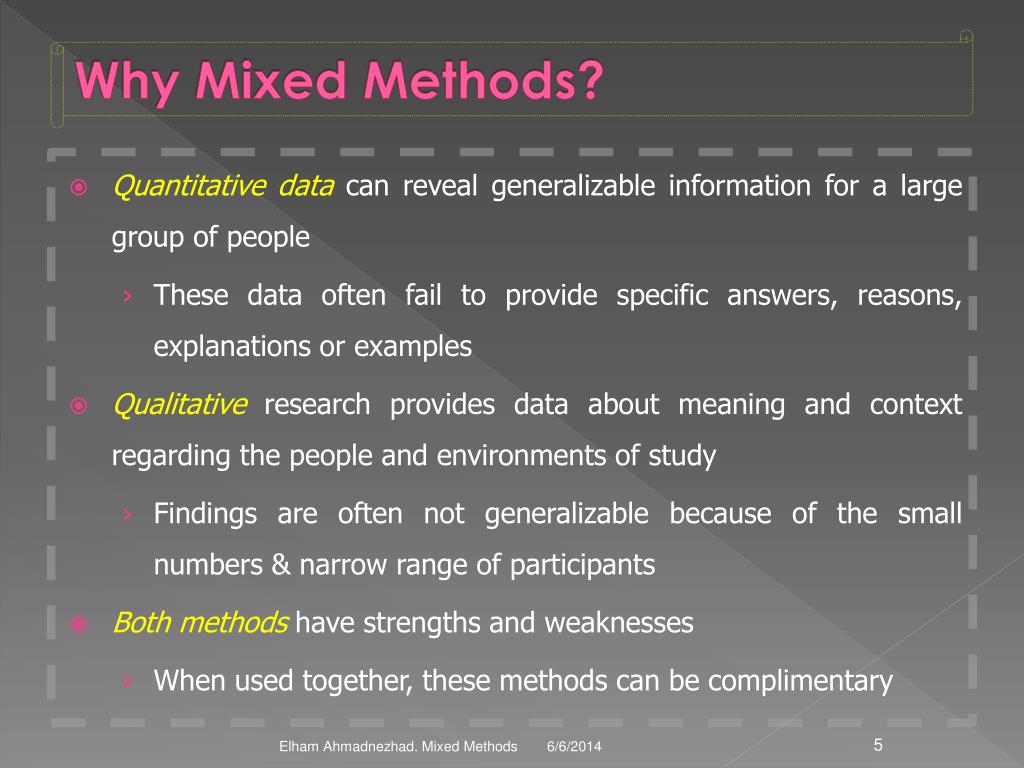
On the other hand, developments during research execution will sometimes prompt the researcher to decide to add additional components. It depends on the research objectives, but a few methods are often used in mixed methods research designs. Mixed methods research is labor-intensive and often requires interdisciplinary teams of researchers to collaborate.
Incorporating feedback from an advisory panel comprised of WIC State agencies, local agencies, and WIC participants helped ensure that the data collection instruments and protocols and study findings were tailored and applicable for the intended audiences. An innovative aspect of the study was the use of use the I + PSE framework which proved to be well-suited to address the study objectives and goals due to its ability to use systems thinking to assess the multidimensional impacts of CVB policy changes. This framework enabled the comprehensive identification and analysis of multiple factors influencing CVB uptake at the WIC State agency, local agency, and participant levels. Overall, the findings show that the implementation of the CVB policy changes at the State and local agency level had cascading effects on WIC participant CVB redemptions. A key outcome of the study assessed whether greater CVB dollar amounts increased WIC participant access to FVs, measured by FV redemption rates.
The qualitative analysis then refined and explored factors related to implementation by WIC agencies that were not readily identified from redemption data alone. The mixed method interpretation helped answer important questions about how the CVB increase was implemented, for whom it worked, and if it did not, why not? Importantly, if the CVB increase did not impact redemption data, or did not increase it equally among all groups, the qualitative phase provided insights into the potential barriers and facilitators to implementation.
Come Together - Hopkins Bloomberg Public Health Magazine
Come Together.
Posted: Wed, 27 Sep 2017 07:00:00 GMT [source]
An inductive-deductive approach was also used to determine the concept of obstetric telephone triage. In this respect, a qualitative study and a literature review were used in the inductive and deductive stages, respectively. Moreover, the validity of the developed guideline was confirmed based on experts’ opinions and results of the AGREE II tool. This study is unique in that it represents the first known experiment of interventions that provide social support and guaranteed income for PEH. Challenges include study retention, given that participants have been recruited while experiencing homelessness, either sheltered or unsheltered.
This can be seen in the historical overview that Creswell and Plano Clark (2011) presented and that was discussed above. For example, we view a theoretical drive as a feature not of a whole study, but of a research question, or, more precisely, of an interpretation of a research question. For example, if one study includes multiple research questions, it might include several theoretical drives (Schoonenboom 2016). This is another method of integration where the researcher follows the same theme or idea from one method of data collection to the next. Mixed methods research is often used in the behavioral, health, and social sciences, as it allows for the collection of numerical and non-numerical data. During these calls, healthcare providers use their obstetric knowledge and experiences to determine the severity of the problem and the urgency of a physical consultation with an obstetrician [1,2,3].
In the present case, we can interpret the various disciplines in the social sciences as more or less autonomous spaces that revolve around the shared stake in producing legitimate scientific knowledge by the standards of the field. What constitutes legitimate knowledge in these disciplinary fields, the production of which bestows scholars with prestige and an aura of competence, is in large part determined by the dominant agents in the field, who occupy positions in which most of the consecration of scientific work takes place. Scholars operating in a field are endowed with initial and accumulated field-specific capital, and are engaged in the struggle to gain additional capital (mainly scientific and intellectual prestige) in order to advance their position in the field. The main focus of these agents will generally be the disciplinary field in which they built their careers and invested their capital. These various disciplinary spaces are in turn part of a broader field of the social sciences in which the social status and prestige of the various disciplines is at stake. The ensuing disciplinary hierarchy is an important factor to take into account when analysing the circulation of new scientific products such as MMR.
Importantly, many participants reported that the Miracle Friends phone buddy program was a critical component of the success or improvement that they experienced from receiving basic income [41]. WIC State agencies took a systems approach and engaged with various divisions to create resources and ensure there was capacity to implement the CVB changes. At the State level, most staff mentioned the CVB changes being an “all hands-on deck” effort by engaging all departments within their WIC unit to successfully implement the CVB changes. Examples provided included collaborations across vendor departments, MIS units to ensure changes could occur, nutrition coordinators issuing food package changes, and communication specialists to develop protocols and materials to communicate with local agency staff and WIC participants. When analyzing redemption rates by race/ethnicity, redemption rates for all groups decreased when the $35/child/month went into effect, and then an increase was observed with the change to $24/child/month (Table 6). When comparing across race/ethnicity groups, non-Hispanic African American/Black WIC families had the lowest redemption rates whereas non-Hispanic Asian families had the highest redemption rates.